
In Sydney, strata buildings are part of everyday life. From high-rise apartments in the CBD to medium-density complexes across Parramatta, Chatswood, and the Inner West, shared residential spaces are constantly in use. Cleaning these environments is essential, but it also introduces real safety risks if not managed correctly. This is where Work Health and Safety compliance becomes critical.
Strata cleaning safety is not just about protecting cleaners. It is about safeguarding residents, visitors, strata managers, and Owners Corporations from avoidable incidents, legal exposure, and long-term costs. Understanding how safety fits into strata cleaning sets the foundation for better decisions and stronger compliance across NSW.
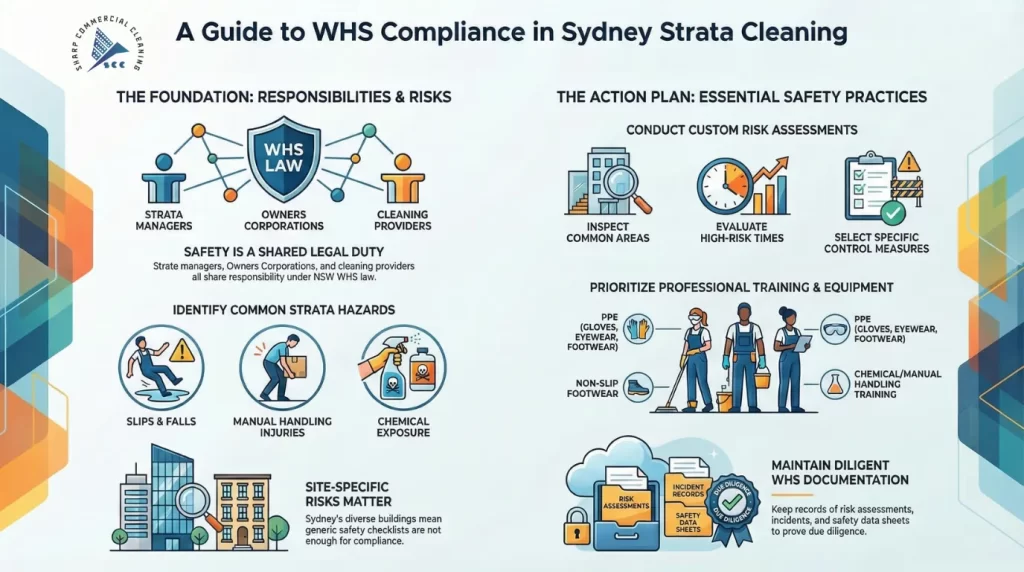
WHS Compliance for Strata Cleaning in NSW
Safety in strata cleaning begins with understanding legal responsibility. In NSW, the Work Health and Safety Act 2011 places a duty of care on anyone who influences workplace conditions. In strata settings, this responsibility is shared.
Strata managers and Owners Corporations are responsible for engaging competent contractors and providing a safe environment. Cleaning providers are responsible for safe systems of work, trained staff, and hazard control. SafeWork NSW guidance makes it clear that residential buildings with contracted services are considered workplaces under WHS law.
This shared responsibility means safety cannot be assumed or outsourced without oversight. Clear expectations, proper documentation, and ongoing communication form the base of WHS compliance in Sydney strata properties.
Common Safety Risks in Sydney Strata Cleaning Environments
Once legal obligations are understood, the next step is recognising where risks actually occur. Sydney strata buildings present unique challenges due to their design, age, and location.
Common risks include:
- Slips and falls in foyers, stairwells, and pool areas, especially during wet weather
- Manual handling injuries from moving bins, furniture, or equipment
- Chemical exposure from incorrect storage or mixing of cleaning products
- Working at heights in stairwells, windows, and car park ventilation areas
- Vehicle interaction risks in underground garages
According to SafeWork NSW data, slips, trips, and falls remain one of the leading causes of workplace injury in cleaning-related work. In strata environments with constant foot traffic, unmanaged hazards can quickly affect residents as well as cleaners.
Conducting Effective Strata Cleaning Risk Assessments
Understanding risks leads naturally to risk assessment. A professional strata cleaning operation does not rely on generic checklists alone. It starts with site-specific assessments tailored to each building.
A proper risk assessment typically includes:
- Inspection of common areas such as lobbies, lifts, corridors, and car parks
- Identification of high-risk times, including peak resident movement
- Evaluation of environmental factors such as coastal moisture or poor ventilation
- Selection of control measures like scheduling, signage, and equipment choice
In Sydney, where strata buildings range from heritage apartments to modern towers, one-size-fits-all approaches fall short. Risk assessments should be reviewed regularly, especially after building upgrades, seasonal weather changes, or reported incidents.
Safety Equipment and Approved Cleaning Practices
Once risks are assessed, prevention becomes the focus. This is where equipment, products, and methods matter.
Effective strata cleaning safety relies on:
- Personal protective equipment such as gloves, non-slip footwear, and eye protection
- Clearly visible wet floor signage placed before cleaning begins
- Use of low-toxicity and approved cleaning chemicals suitable for residential settings
- Equipment that reduces strain, such as ergonomic mops and trolleys
SafeWork NSW emphasises that the correct use of equipment is as important as having it on site. In Sydney strata buildings, where residents may include children and older occupants, visible safety measures also build trust and confidence in cleaning operations.
Training, Inductions, and Cleaner Competency
Equipment alone does not ensure safety. Training connects policy to practice.
Professional strata cleaning teams should receive:
- WHS training relevant to residential environments
- Manual handling instruction to reduce injury risk
- Chemical handling and safety data sheet awareness
- Site-specific inductions for each strata property
In NSW, many strata schemes also expect cleaning staff to hold a Working With Children Check, particularly in family-oriented complexes. Ongoing training ensures cleaners adapt to changing regulations, new equipment, and evolving building layouts across Sydney.
Incident Reporting and WHS Documentation
Even with strong prevention measures, incidents can occur. What matters next is how they are handled and recorded.
Proper WHS documentation includes:
- Incident and near-miss reports
- Risk assessments and method statements
- Safety data sheets for all chemicals used
- Cleaning schedules and inspection logs
These records are not just paperwork. They provide evidence of due diligence and are essential during audits, insurance claims, or disputes. For strata managers in Sydney, well-maintained documentation reduces risk exposure and supports transparent decision-making.
The Role of Strata Managers and Owners Corporations
Safety does not sit solely with cleaning contractors. Strata managers and Owners Corporations play a crucial role in maintaining WHS standards.
Their responsibilities include:
- Selecting licensed, insured, and experienced cleaning providers
- Reviewing WHS documentation before engagement
- Coordinating cleaning schedules to minimise resident disruption
- Communicating safety procedures to residents when required
When governance aligns with professional cleaning practices, safety becomes part of the building culture rather than a reactive task.
How Professional Strata Cleaning Reduces WHS Risk
All these elements come together through professional strata cleaning services. Experienced providers understand Sydney’s building diversity, regulatory environment, and resident expectations.
By engaging Strata cleaning Sydney specialists, strata schemes benefit from structured risk management, trained personnel, compliant documentation, and safer outcomes across shared spaces. When combined with insights from a comprehensive Strata Cleaning Guide, decision-makers gain clarity on best practice rather than relying on assumptions.
Conclusion
Safety in strata cleaning is not a single action or checklist. It is a continuous journey that starts with legal awareness and extends through risk assessment, training, documentation, and governance. In Sydney’s complex strata landscape, this approach protects people, properties, and reputations.
When safety is embedded into strata cleaning practices, buildings operate more smoothly, incidents reduce, and compliance becomes manageable rather than stressful. For strata managers and Owners Corporations across NSW, investing in proper WHS practices is not just responsible. It is essential for long-term success and community wellbeing.