
Sydney’s strata landscape is diverse. From high-rise apartment towers in the CBD and Parramatta to low-rise complexes across the Inner West and Northern Beaches, no two buildings operate the same way. This difference in structure directly affects how strata cleaning should be planned, delivered, and managed.
Understanding how cleaning requirements change between high-rise and low-rise strata buildings helps owners corporations and strata managers make better decisions. It improves hygiene, reduces safety risks, and protects long-term property value across Sydney, NSW.
This guide walks through those differences step by step, so you can clearly see what changes, why it matters, and how the right cleaning approach supports your building.
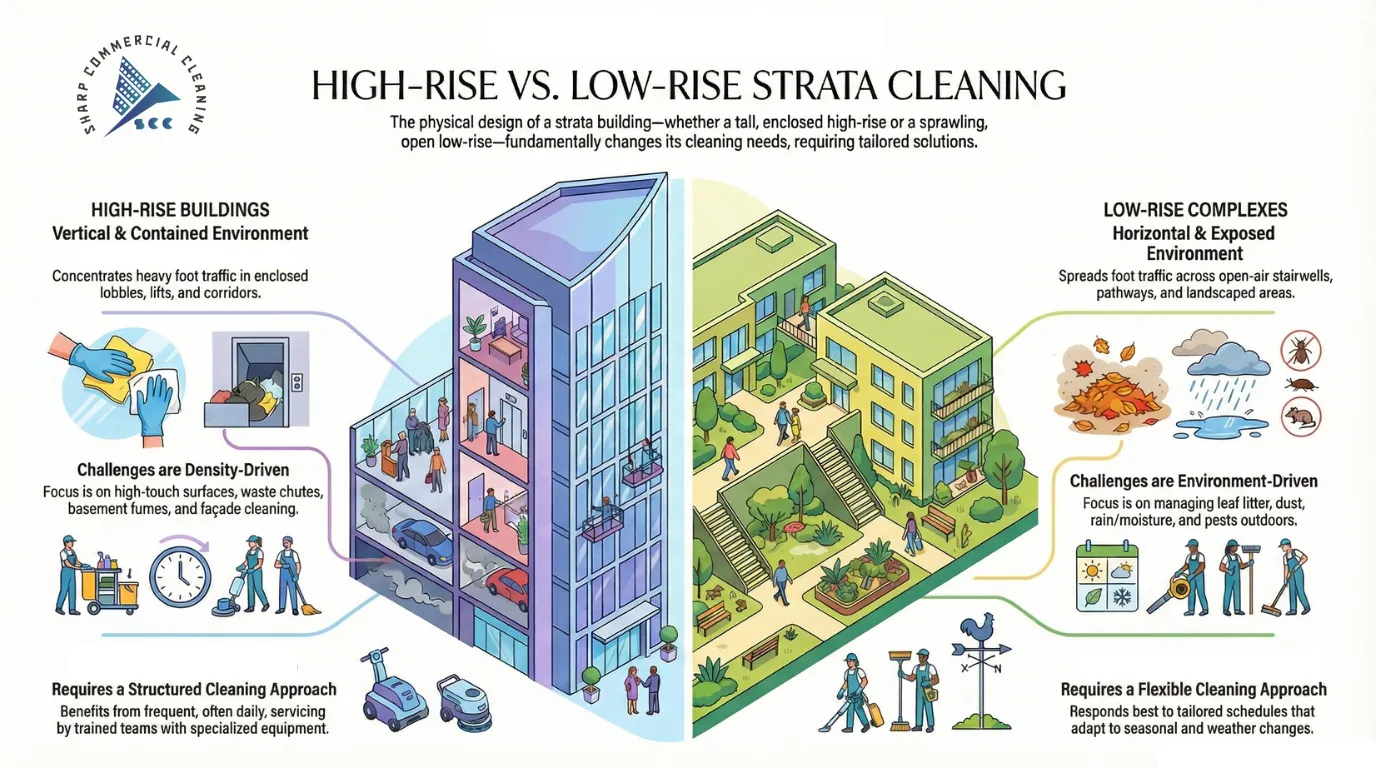
Understanding High-Rise and Low-Rise Strata Buildings in Sydney
Before comparing cleaning needs, it helps to define what high-rise and low-rise strata typically look like in Sydney.
High-rise strata buildings are generally multi-storey complexes with lifts, enclosed lobbies, basement car parks, and shared facilities such as gyms or rooftop areas. These buildings are common in the Sydney CBD, Chatswood, Green Square, and growing hubs like Parramatta.
Low-rise strata buildings are usually two to four storeys, often without lifts. They commonly feature open stairwells, shared walkways, outdoor parking, and landscaped common areas. You see these frequently in suburbs like Marrickville, Ryde, and Cronulla.
Once these structural differences are clear, the impact on cleaning becomes obvious.
How Building Design Influences Strata Cleaning Requirements
Building height and layout shape how dirt enters, spreads, and builds up across common areas. In Sydney, design also interacts with local conditions such as coastal air, traffic pollution, and seasonal weather.
High-rise buildings concentrate foot traffic in small zones like lifts, lobbies, and corridors. Low-rise buildings spread traffic across outdoor areas, stairwells, and pathways. This shift changes both cleaning frequency and technique.
According to NSW Fair Trading strata data, buildings with higher resident density experience faster wear in shared spaces, especially flooring and touchpoints. That means cleaning is not only about appearance but also asset preservation.
These design factors lead directly into different cleaning challenges.
Cleaning Challenges in High-Rise Strata Buildings
High-rise strata cleaning in Sydney is complex and highly structured. The most common challenges include:
- Heavy daily foot traffic through lobbies and lifts
- Frequent touchpoints such as lift buttons, handrails, and access panels
- Multi-level waste rooms and chute systems
- Basement car parks that trap dust, moisture, and vehicle emissions
- Window and façade cleaning at height
In busy Sydney locations, timing also matters. Cleaning often needs to happen outside peak hours to minimise disruption for residents and commercial tenants.
Because these challenges stack vertically, consistency and process control become critical.
Cleaning Challenges in Low-Rise Strata Complexes
Low-rise strata buildings face a different set of pressures, shaped by openness and environmental exposure.
Common challenges include:
- Leaf litter and dust from surrounding trees and roads
- Open stairwells that collect debris and moisture
- Outdoor walkways affected by rain and humidity
- Fewer but wider common areas that require manual cleaning
- Bin areas that attract pests if not serviced regularly
Sydney’s climate plays a larger role here. Coastal suburbs face salt residue, while western areas experience higher dust levels during dry months. These factors increase the need for flexible cleaning schedules rather than fixed routines.
As these challenges differ, safety requirements also change.
Safety, Access, and Compliance Differences in NSW
Safety obligations apply to all strata cleaning, but the risks are not the same across building types.
High-rise cleaning involves working at heights, operating machinery in confined spaces, and managing public safety in busy environments. NSW Work Health and Safety regulations require documented risk assessments, trained staff, and controlled access methods.
Low-rise buildings reduce height-related risk but introduce other concerns, such as slip hazards on outdoor stairs and uneven surfaces.
In both cases, compliance protects residents, cleaners, and the owners corporation. It also reduces liability exposure, which is a growing concern for Sydney strata committees.
Once safety is addressed, the focus shifts to choosing the right cleaning approach.
Recommended Cleaning Approach for High-Rise vs Low-Rise Strata
High-rise strata buildings benefit from structured, frequent cleaning supported by trained teams and specialised equipment. Daily or near-daily servicing is often required in Sydney’s high-density areas to maintain hygiene and presentation.
Low-rise complexes respond better to tailored schedules that focus on outdoor areas, seasonal changes, and periodic deep cleans. A flexible approach prevents over-servicing while still maintaining standards.
What does not work is applying the same checklist to every building. Sydney’s strata environment is too varied for that.
This is why many committees choose professional strata cleaning Sydney services, where local experience guides the cleaning strategy rather than a generic template.
Choosing the Right Strata Cleaning Partner in Sydney
Selecting a strata cleaning provider should always reflect your building type.
For high-rise buildings, look for experience with large complexes, clear safety systems, and the ability to manage daily cleaning routines. For low-rise buildings, prioritise adaptability, outdoor maintenance expertise, and seasonal planning.
A strong provider will also educate strata managers, not just clean. Resources like a comprehensive Strata Cleaning Guide help decision-makers understand what their building truly needs and why.
This partnership approach leads to better outcomes and fewer long-term issues.
Conclusion
High-rise and low-rise strata buildings in Sydney operate under very different conditions. Their cleaning requirements differ in scope, frequency, safety, and execution.
When cleaning strategies match building design, common areas stay safer, cleaner, and more inviting. Assets last longer, complaints reduce, and compliance becomes easier to manage.
By understanding these differences, Sydney strata managers and owners corporations can make informed decisions that support both residents and property value, now and into the future.