
Managing a strata property in Sydney is rarely straightforward. From high-rise towers in the CBD to coastal apartment blocks in the Eastern Suburbs and growing residential complexes across Western Sydney, cleaning needs vary widely. What remains consistent, however, is the role a strata cleaning contract plays in keeping these buildings safe, compliant, and appealing to residents.
Before any service begins, the contract sets expectations, defines responsibility, and protects the Owners Corporation. Understanding why this document matters is the first step toward making better decisions when engaging a cleaning provider.
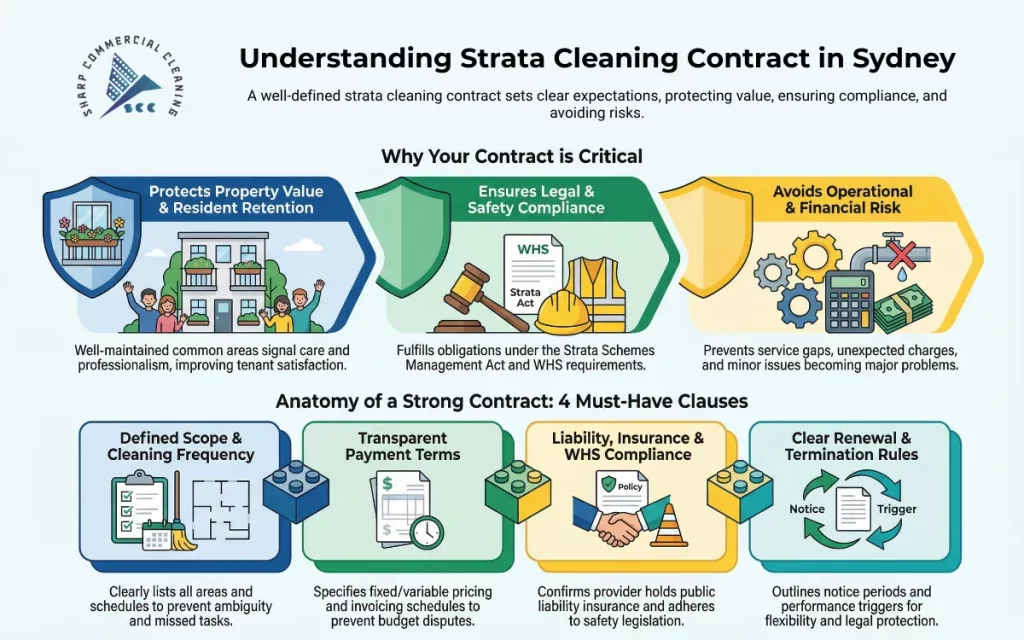
Why Strata Cleaning Contract Matter in Sydney
Once a cleaning contract is signed, it becomes the foundation of daily building presentation and long-term asset protection. In a competitive Sydney property market, the quality of shared spaces directly influences how residents and tenants perceive a building.
Protecting Residents and Property Value
Well-maintained common areas signal care, safety, and professionalism. Lobbies, lifts, and corridors that are consistently cleaned help preserve finishes and reduce wear caused by heavy foot traffic. According to industry data from the Property Council of Australia, buildings with visibly maintained common areas experience higher tenant retention and fewer resident complaints.
Compliance and Legal Responsibilities
Beyond appearance, contracts also support legal compliance. Under the Strata Schemes Management Act 2015 (NSW), Owners Corporations are responsible for maintaining common property. A clearly defined cleaning agreement helps meet these obligations while ensuring contractors follow Work Health and Safety requirements, including risk assessments and safe chemical use.
Avoiding Operational and Financial Risk
When contracts lack detail, gaps in service often appear. Missed cleaning tasks, unclear responsibilities, and unexpected charges become common issues. In Sydney, where buildings face coastal humidity, seasonal storms, and high usage, these gaps quickly turn into larger maintenance problems. Recognising these risks naturally leads to the next step, understanding what must be written into the contract itself.
Key Contract Clauses Explained for Sydney Properties
After establishing why contracts matter, attention should shift to the clauses that protect strata managers on a practical level. These sections determine how services are delivered, monitored, and adjusted over time.
Payment Terms and Pricing Structure
Payment terms should clearly state whether pricing is fixed or variable, along with invoicing schedules and conditions for additional services. Transparent pricing helps Sydney strata managers budget accurately and prevents disputes over unapproved work.
Cleaning Frequency and Defined Scope
Cleaning frequency must reflect how the building is used. High-rise apartments in central Sydney often require daily attention to lifts and entry points, while smaller suburban complexes may need weekly services. The contract should list all areas covered so there is no ambiguity about what is included.
Liability, Insurance, and WHS Compliance
A reputable cleaning provider should hold current public liability insurance and comply with NSW WHS legislation. This protects the Owners Corporation from potential claims related to injury or property damage. Contracts should also outline procedures for incident reporting and risk management.
Renewal, Termination, and Dispute Resolution
Clear renewal and termination clauses provide flexibility while reducing legal risk. Notice periods, performance review triggers, and dispute resolution steps should be practical and aligned with NSW strata regulations. These clauses set the tone for how the relationship evolves, which makes reviewing the service scope even more important.
How to Review Your Strata Cleaning Service Scope Effectively
With the contract clauses understood, the next focus should be whether the service scope truly matches the building’s needs. This is where many Sydney strata managers discover gaps between expectation and reality.
A thorough scope review should include:
- Internal common areas such as lobbies, corridors, stairwells, and lifts
- External areas including entryways, car parks, and bin rooms
- Seasonal requirements driven by Sydney’s climate, such as moisture control and debris removal
Ensuring the cleaning provider can meet these needs helps prevent under-servicing and supports consistent standards. This evaluation also plays a key role when contracts approach renewal or require termination.
Managing Renewals and Terminations in Sydney
Once services are underway, ongoing oversight becomes essential. Contract management does not end at signing. Instead, it evolves as building needs change.
Preparing for Contract Renewal
Before renewing, strata managers should assess performance against the agreed scope. Resident feedback, inspection reports, and issue resolution timelines provide valuable insight. In Sydney, seasonal challenges such as increased humidity or higher foot traffic during holiday periods should also inform renewal discussions.
Ending a Contract Without Disruption
When termination becomes necessary, following the agreed process is critical. NSW legislation and contract terms require clear documentation and adherence to notice periods. A structured exit ensures continuity of cleaning services and protects resident satisfaction during the transition.
Sydney-Specific Considerations for Strata Cleaning Contract
Every city has its own challenges, and Sydney is no exception. High-rise buildings demand more frequent cleaning of shared vertical spaces, while coastal properties require additional care to manage salt exposure and moisture.
Including performance reviews and adjustment clauses in the contract allows cleaning schedules to evolve with these conditions. For broader insights, strata managers can refer to the Strata Cleaning Guide or work with specialists offering Strata cleaning Sydney services tailored to local environments.
Conclusion
Strata cleaning contracts play a central role in maintaining safe, compliant, and well-presented buildings across Sydney. By understanding why contracts matter, reviewing key clauses, and actively managing service scope and renewals, strata managers can reduce risk and improve long-term outcomes for residents and Owners Corporations.
A proactive approach to contract management does more than ensure cleanliness. It supports property value, regulatory compliance, and everyday livability in Sydney strata communities.